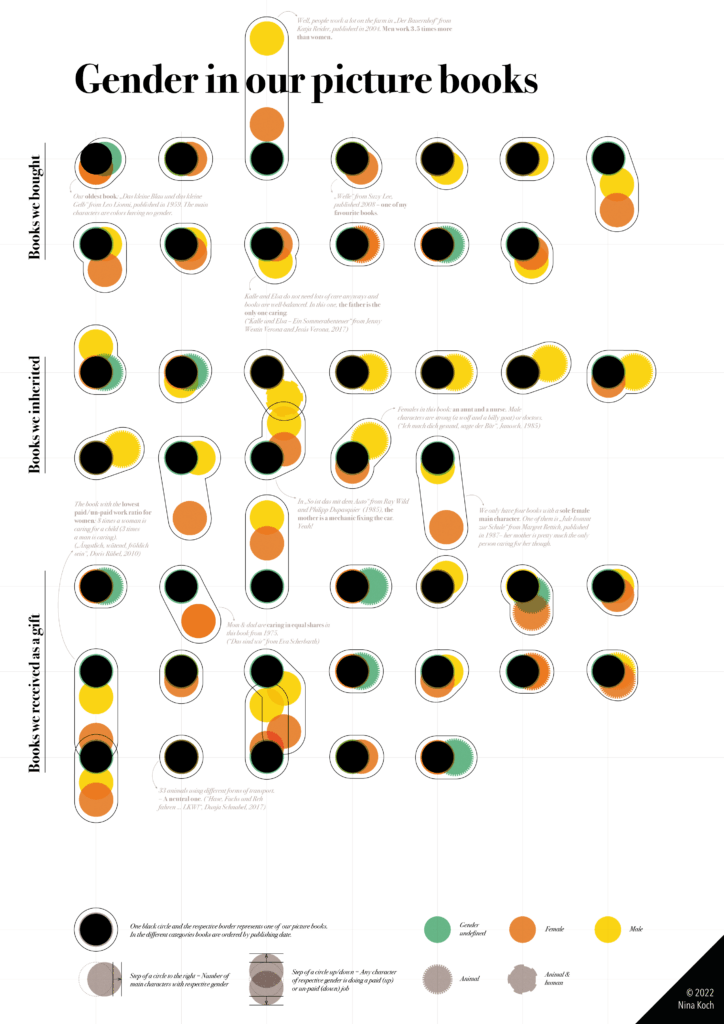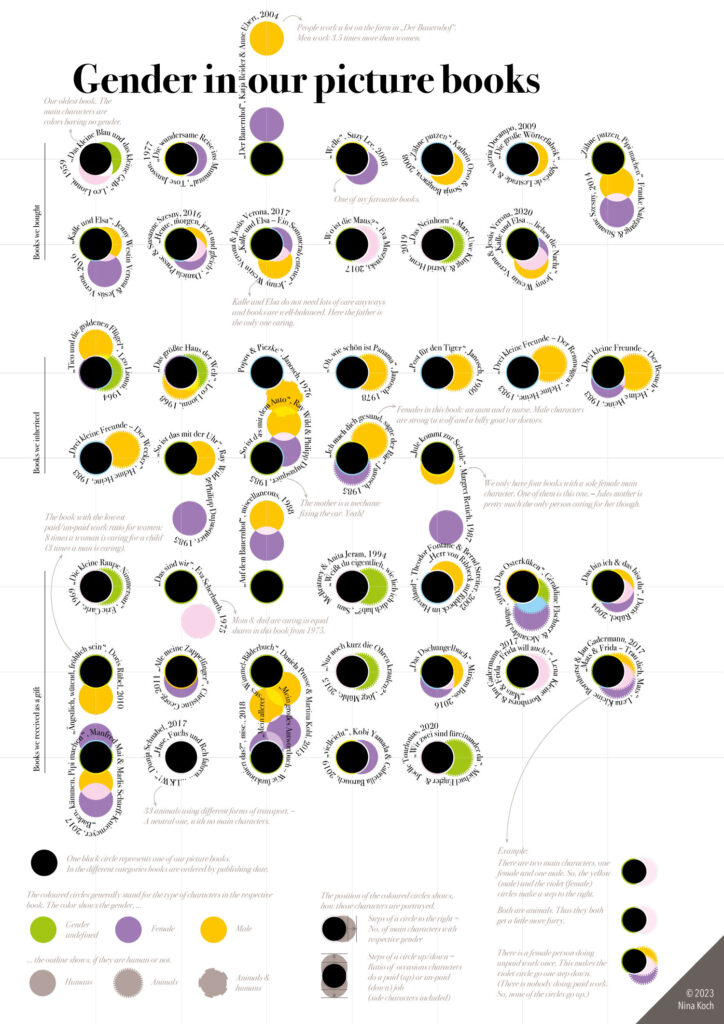
Kids are absorbing the world around them. They are creating their knowledge and believes from scratch. At home we are trying to set an example of an equal relationship. Plus we read a lot to our children. Thus I was wondering: What are we telling our kids about the roles of men and women in the books we are reading to them?
Main goals
I wanted to focus on:
- What do our kids see? = Who is appearing and what are they doing?
- How to change things? = Where did we get the books from? Which aspects should we keep an eye on?
Research & Preparation
I started with collecting data. My first step was to limit the amount of books to look into to the ones with one story only and focusing on the ones we were reading regularly. I ended up with a data set of 44 books.
I tracked the data that I presumed to have connections: the gender of the authors, the year the book was published, the gender of the main characters, who bought the book, … surprisingly I found some older books being rather progressive and female authors propagating dusty cliches. – But would our children care? Nah, they don’t know the author and they don’t care about the publishing date. They just see what’s on the pictures and hear what we are reading to them.
So, back to collecting different data. Thus the final data set is now containing all the main and side characters appearing in the story and the gender of every person that appears on pictures or in the story doing care work vs. payed work.
Design phase
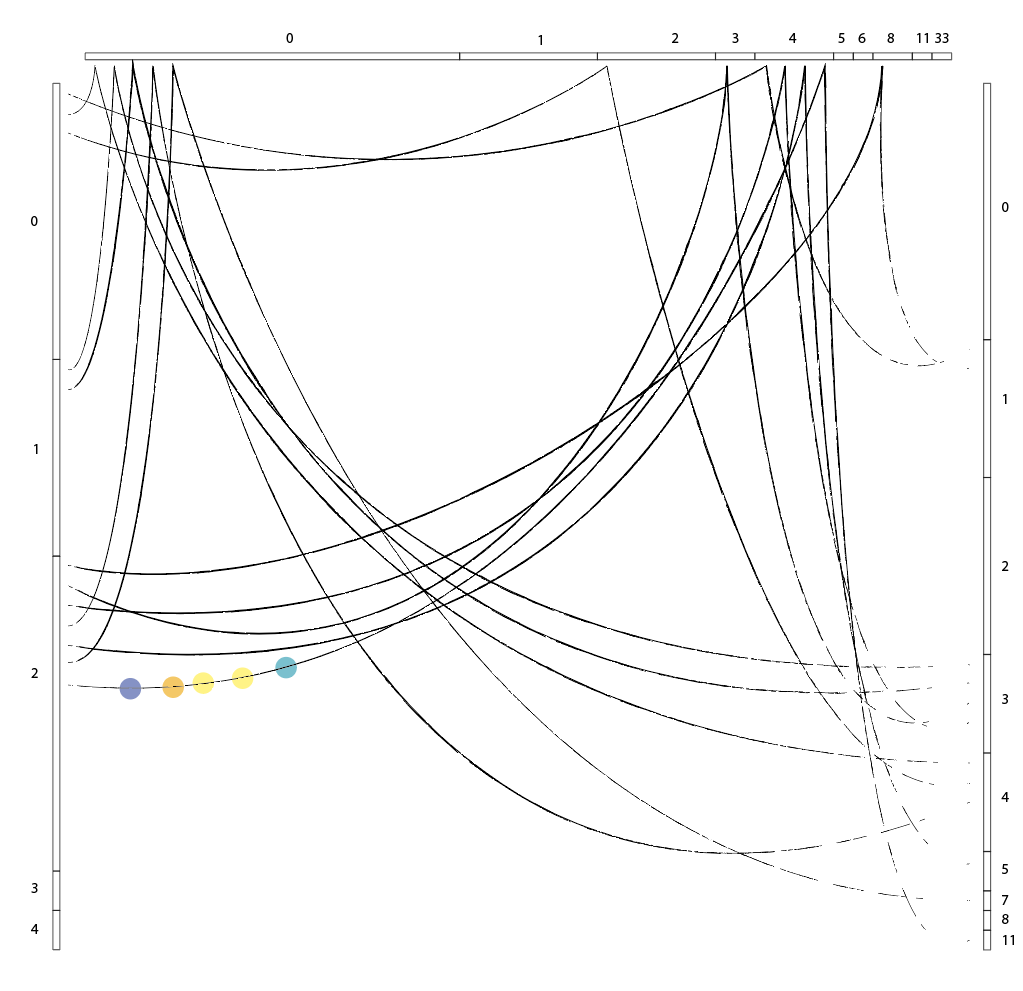
Before coming up with the final idea, I thought into various directions also design-wise. First I wanted to create different characters for each book according to my collected data. Then I tried out some sort of garlands.
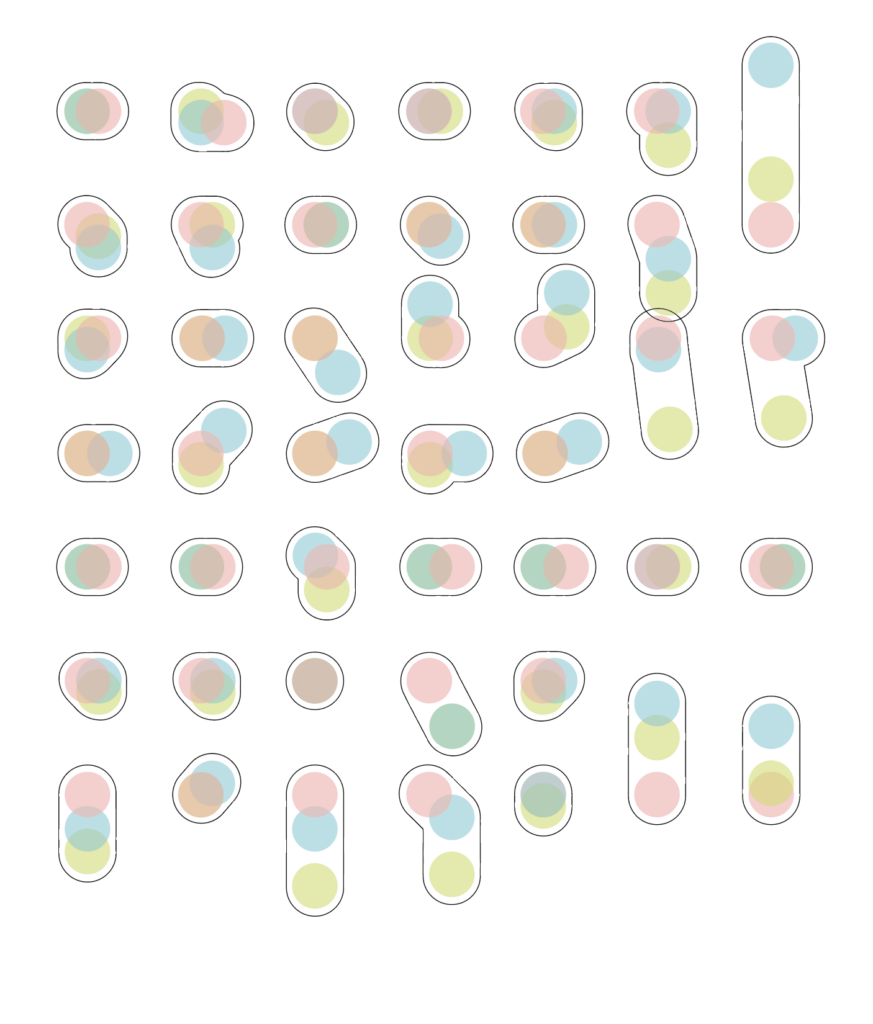
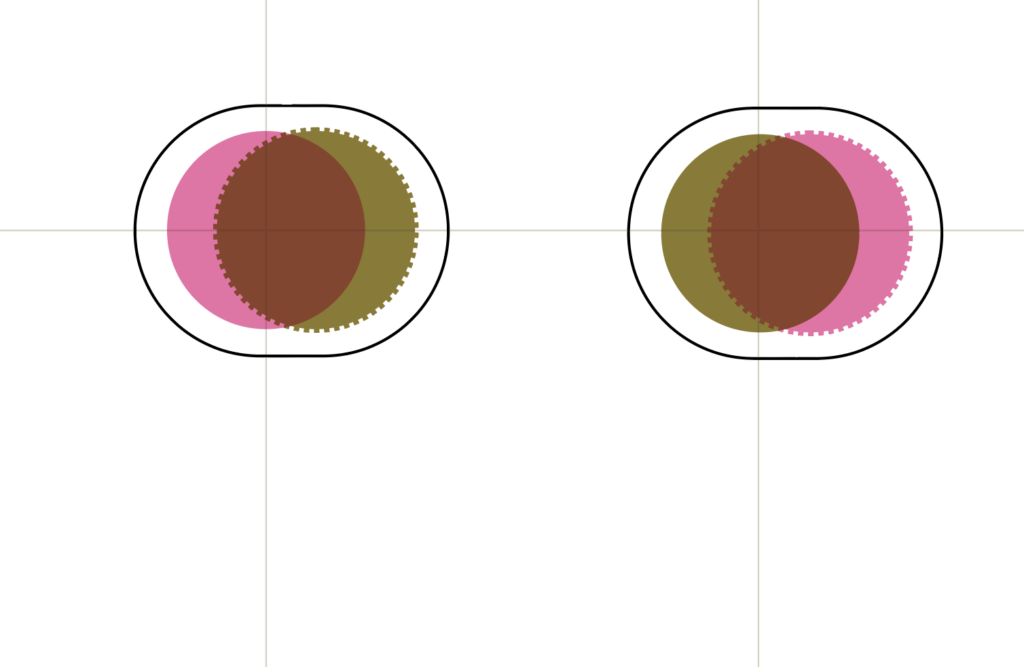
At least I came up with the idea of the characters „becoming visible“: Every book is represented by a black dot and the data is „appearing“ as colored circles stepping to the right, the top or the bottom, representing the numbers of female, male or non-defined main characters and the (female, male or non-defined) characters doing payed vs. care work.
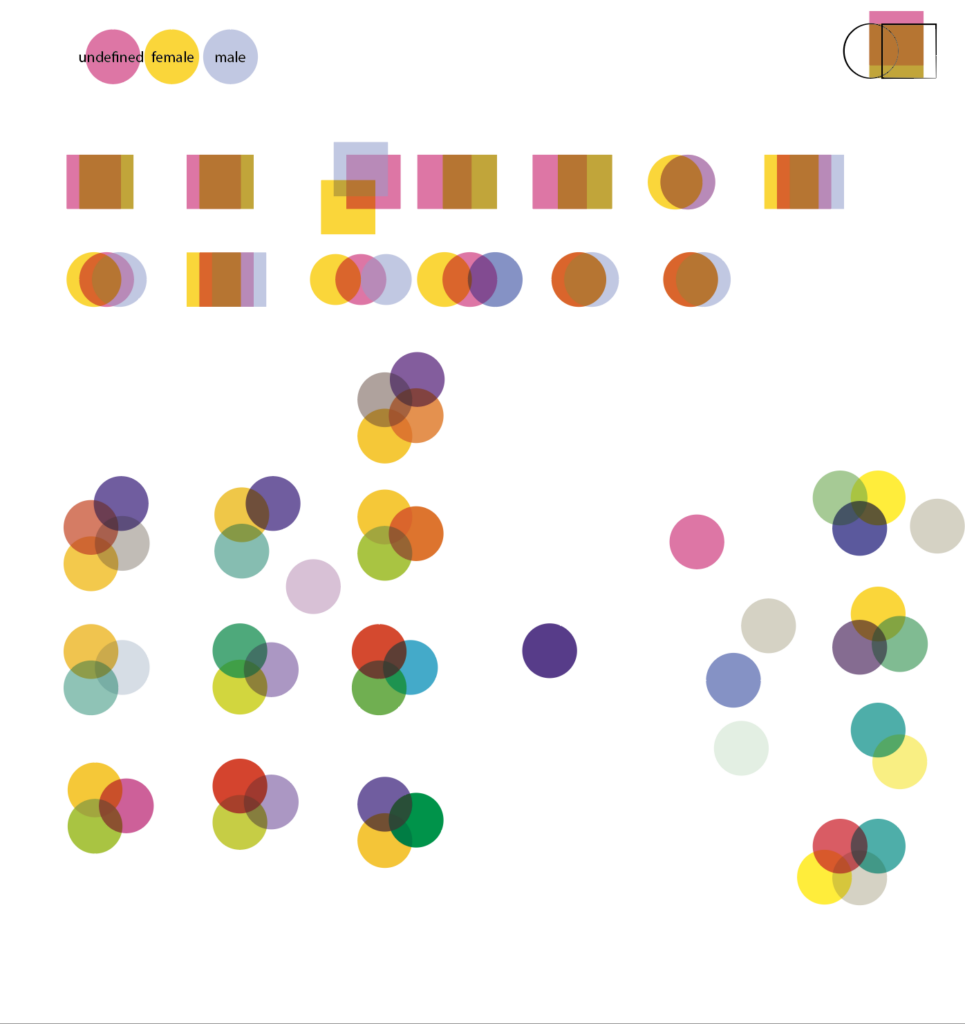
Finalizing the project
The challenges of this project: finding non-standard colors, the limited space and explaining the unusual representation of the data. I handed my version from 2022 in to the Information is Beautiful Award and made it to the Longlist. – But I wasn’t fully satisfied.
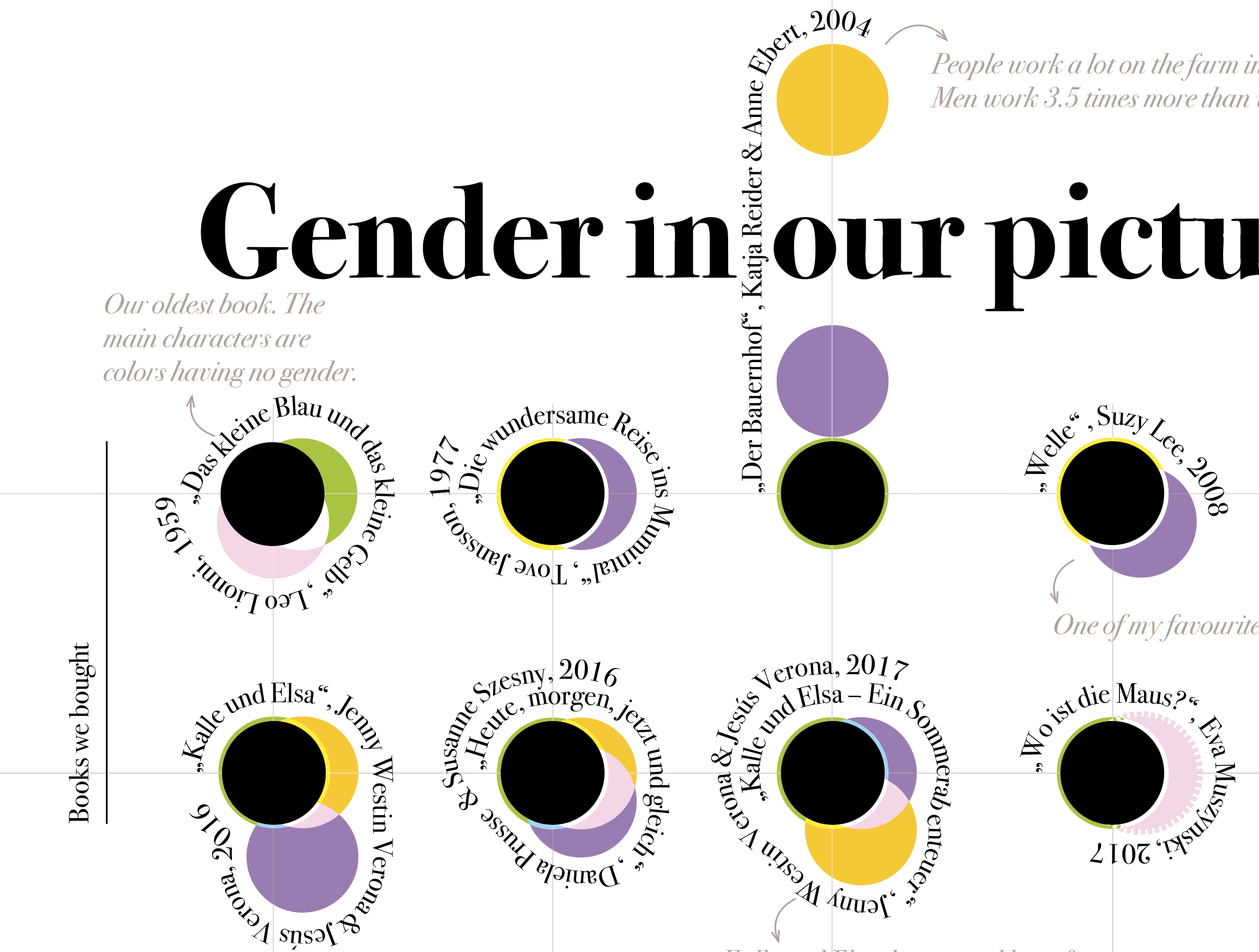
I got back to the project in 2023 and I did a rework: Changing the colors (again), adding the books‘ titles and adding an example how to read the data viz. A decided improvement.